


Sotheby's International Realty
- 95 Avenue Victor Hugo
- 75116 PARIS, France
- +33 1 40 60 50 00
Sotheby's International Realty
- 50 rue d'Auteuil
- 75016 PARIS, France
- +33 1 56 26 56 55
Sotheby's International Realty
- 82 Avenue de Wagram
- 75017 PARIS, France
- +33 1 46 22 27 27
Sotheby's International Realty
- Place Sainte Foy - 2 Rue de Chézy
- 92200 NEUILLY, France
- +33 1 41 43 06 46
Sotheby's International Realty
- Place Sainte Foy - 2 rue de Chézy
- 92200 NEUILLY, France
- +33 1 41 25 00 00
Sotheby's International Realty
- 37-39 rue de Turenne
- 75003 PARIS, France
- +33 1 48 87 14 41
Second homes in western Paris: what owners need to plan for
LE NOUVEL ÉCONOMISTE
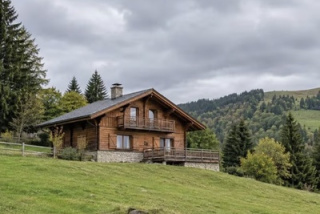
For many families in western Paris, a second home is as much about legacy as it is about holidays. For international buyers, the logic often runs the other way: a pied-à-terre in Passy, in Neuilly-sur-Seine or near the parc Monceau, used a few weeks a year.
Either way, second-home status comes at a price, and that price has risen. A surcharged residence tax, tighter letting rules, capital gains, the French real estate wealth tax and succession planning: here is what owners should have in mind in 2026.
Residence tax: the surcharge is now standard in western Paris
France abolished the taxe d’habitation for main homes only. Second homes are still liable, and towns in high-demand areas may raise the municipal share by 5% to 60% (article 1407 ter of the French tax code).
In Paris, the surcharge stands at 60%, the legal maximum. In the Hauts-de-Seine, the rates recorded for 2025 show 60% in Boulogne-Billancourt, 50% in Neuilly-sur-Seine and Levallois-Perret, and 40% in Issy-les-Moulineaux. For a family apartment on avenue Victor-Hugo or rue de la Pompe that sits empty for part of the year, the bill adds up.
One detail owners often miss is the property occupancy declaration on the French tax portal. A home recorded under the wrong status, or a change of use left unreported, leads to an incorrect assessment. A yearly check is worth the few minutes it takes.
Letting a second home in Paris: tightly regulated
Short holiday lets can look like an easy way to offset rising costs. In Paris, the room for manoeuvre is narrow. A second home offered as a short-term tourist let requires a change-of-use authorisation, usually with a compensation requirement. The Le Meur law of 19 November 2024 gave local authorities stronger enforcement powers and extended mandatory registration of holiday lets.
Conventional furnished lets remain possible, on a one-year lease or a short-term mobility lease. The energy performance certificate then matters: since 1 January 2025, a property rated G can no longer be let under a new lease. In a Haussmann building, improving the rating often depends on works that only the co-ownership can approve.
Selling: capital gains planning starts years ahead
Unlike a main home, a second home is subject to capital gains tax on resale. The rate is 19% income tax plus 17.2% social charges. The 2026 social security budget raised the CSG levy on several types of investment income, but private individuals’ property gains were left out of that increase.
Holding-period relief starts after five years. Gains become fully exempt from income tax after 22 years and from social charges after 30 years. An additional surcharge of 2% to 6% applies to taxable gains above €50,000.
In Passy, La Muette or the Saint-James quarter of Neuilly, where many homes have been held for decades, the timing of a sale has a direct impact on net proceeds. It is one of the first points to review before going to market.
Wealth tax: a second home counts at full value
The 30% allowance under France’s real estate wealth tax (IFI) applies to the main home only. A second home is declared at its full market value as at 1 January. Once net real estate assets exceed €1.3 million, an accurate valuation matters: too low and it invites a reassessment, too high and it inflates the bill for no reason.
Succession: plan it rather than inherit the problem
A second home is often the most emotionally charged asset in a family estate. It is also the one that raises the most questions on succession: joint ownership between siblings, shared use, upkeep costs. A gift of the bare ownership or a property holding company (SCI) can help. Both are best arranged with a notaire well before the time comes.
Keep or sell: it comes down to actual use
The real question is often a simple one: how many weeks a year is the property lived in? A reception apartment on boulevard Suchet or a duplex with a terrace in Les Sablons keeps real value for a family that returns to Paris often. A home that is rarely used, with rising service charges, residence tax and maintenance, deserves a clear-headed review.
Buyers in western Paris remain highly selective. A high floor, an open view, outdoor space or proximity to sought-after schools all weigh directly on price. Knowing where a property stands on those criteria makes for a better decision.
Valuing a second home in western Paris: pricing, advice and support
A sale, a wealth tax return, a gift or a wider portfolio decision all start with a sound valuation. The teams at Paris Ouest Sotheby’s International Realty know how prices shift from one street to the next, from Passy to Neuilly-sur-Seine, from Boulogne Nord to Saint-Cloud. They draw on the Sotheby’s International Realty network, present in 86 countries and territories, to reach French and international buyers.
To arrange a complimentary valuation of your property, call our team on +33 1 46 22 27 27.
FAQ: owning a second home in western Paris
Do second homes in France still pay residence tax in 2026?
Yes. The abolition of the taxe d’habitation applies to main homes only. Second homes are taxed every year, and towns in high-demand areas can raise the municipal share by 5% to 60%. Paris applies the maximum 60% surcharge, and most towns in western Paris have voted a surcharge of their own.
Why is the sale of a second home taxed in France?
Because only a main home is fully exempt from capital gains tax. On a second home, the gain is taxed at 19% income tax plus 17.2% social charges, with progressive relief after five years of ownership. Gains are fully exempt from income tax after 22 years and from social charges after 30 years.
Which towns in western Paris apply a second-home surcharge?
Paris applies a 60% surcharge. According to the rates recorded for 2025, Boulogne-Billancourt applies 60%, Neuilly-sur-Seine and Levallois-Perret 50%, and Issy-les-Moulineaux 40%. Saint-Cloud and Meudon have also voted a surcharge. Rates can change from year to year, so the tax notice remains the reference.
Which properties hold their value best as a second home in western Paris?
Those that combine address, floor level and outdoor space. A high-floor apartment with an open view in the 16th, a duplex with a terrace in Les Sablons or a townhouse with a garden in Boulogne Nord still find buyers in a selective market. Homes free from overlooking and close to well-regarded schools remain the most sought after.
Who buys second homes in western Paris?
International buyers looking for a pied-à-terre in Paris, families based elsewhere in France or abroad who want to keep an address in the capital, and parents housing a student child. These buyers favour quiet, safe and well-connected neighbourhoods such as Passy, La Muette, Auteuil and Neuilly-sur-Seine.
How do you value a second home in Paris or Neuilly?
Start with the micro-location. The street, floor, view, condition and outdoor space move the price far more than the neighbourhood average. Paris Ouest Sotheby’s International Realty offers a complimentary valuation based on recent comparable sales, suitable for a sale as well as a wealth tax return.
Photo credit: all rights reserved, Le Nouvel Économiste
For many families in western Paris, a second home is as much about legacy as it is about holidays. For international buyers, the logic often runs the other way: a pied-à-terre in Passy, in Neuilly-sur-Seine or near the parc Monceau, used a few weeks a year. Either…
Read more
Marcel Pagnol belongs to the hills of Aubagne, where he was born. Yet it was in Paris, on the square de l’avenue Foch, that he wrote La Gloire de mon père (My Father’s Glory) and Le Château de ma mère (My Mother’s Castle). The hôtel particulier he moved into in 1956,…
Read more
In its 29 October to 4 November 2026 issue, Challenges devotes its cover to property, with a full chapter on historic central Paris, from place Vendôme to place des Vosges. The finding is simple. These addresses keep their loyal buyers, mostly French, yet prestige…
Read more